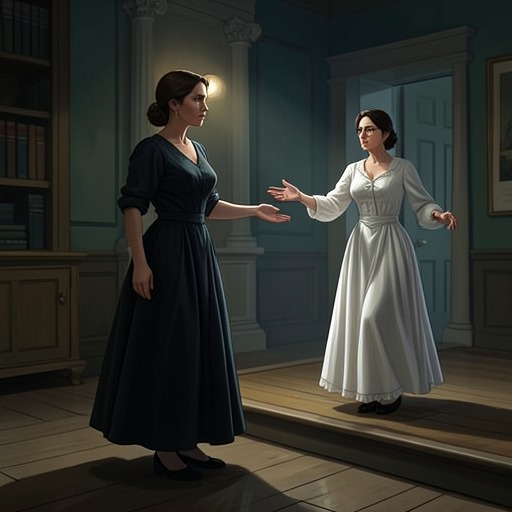
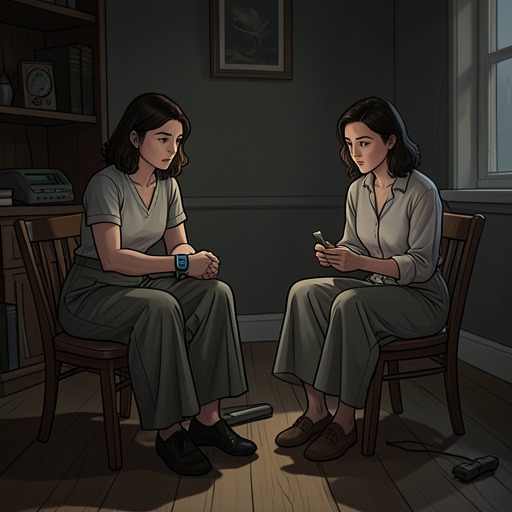
Carrie helps Lo escape from the Aurora
The Woman in Cabin 10Carrie helps Laura Blacklock escape from the Aurora by turning the impersonation that concealed a murder into a practical escape plan. She gives Laura a passport, exchanges clothes with her, and directs her to leave the ship disguised as Anne Bullmer before continuing under Carrie’s identity. The aid is concrete but costly: Carrie stays aboard, asks Laura to delay going to the police, and makes her departure depend on getting away before Richard Bullmer can intervene.
Circumstances and Stakes
By the time Carrie offers help, Laura is being held in a cramped hidden cabin and fears that Richard and his accomplices will kill her because she knows Anne is dead and that the woman presented as Anne is an impostor. The deception had been prepared before the voyage: Richard arranged for Carrie, an aspiring actress he had met at The Magellan, to impersonate his wife. Carrie had been expected to pass as Anne for the trip, then return to her own identity afterward. Richard’s prohibition on photographs of Anne helped protect the substitution from scrutiny.
The disguise depended on Anne’s changed appearance during cancer treatment. When Laura first encountered the woman represented as Anne, the headscarf, missing eyebrows, pale complexion, and apparent illness made her look markedly different from the transformed figure Laura later recognized. Carrie and Anne shared height, weight, and broad cheekbones, while their eyes differed. With little opportunity for the other passengers to compare the supposed Anne with an earlier image, the altered hair and carefully pencilled eyebrows helped Carrie perform the role. Laura’s discovery that the real Anne had been dead since the voyage began turned the disguise into evidence of a larger crime—and made Laura dangerous to Richard.
Carrie’s own account helps explain why she had accepted the arrangement. She had worked as a waitress at The Magellan while trying to become an actress, and described Richard’s courtship as an entry into a life she had never imagined. She knew he was married, but accepted his explanation that the marriage was effectively over and that he would be free to marry her after Anne died. When Anne’s death disrupted the plan, Richard persuaded Carrie to help dispose of the body and continue the impersonation. Laura’s warning that Richard might next eliminate Carrie once he had Anne’s money challenges the romantic story Carrie has relied on; Carrie insists that Laura does not understand him.
The Identity Exchange
Carrie begins the escape by producing her own passport. She removes her headscarf, revealing her shaved head with new growth, and strips down so that the two women can exchange clothes. Laura takes Carrie’s light silk garments and espadrilles; Carrie puts on Laura’s worn jeans, T-shirt, and hoodie. The contrast between expensive silk and Laura’s stained, repeatedly worn clothes makes the exchange more than a change of costume: each woman takes on the other’s visible role as the means of separating their identities from the shipboard deception.
Carrie tells Laura to pull her hair back and keep the headscarf in place. She rejects shaving Laura’s head as impractical, noting that real hair may be less likely to attract scrutiny when Laura uses a passport photograph. Her instructions establish a two-stage plan: Laura is to leave the vessel looking like Anne, then use Carrie’s passport for onward travel. Carrie warns that Richard has Laura’s passport and may have influential connections in Norway, so simply presenting herself as Laura would expose her to immediate danger.
The route Carrie proposes is deliberately indirect. Laura is to get away from the coast, cross into Sweden, and avoid flying to London, where Richard would expect her to go; Carrie suggests travelling through another city, such as Paris. She also gives Laura the key to the suite and points out a purse containing about five thousand kroner in Norwegian, Danish, and Swedish currency, as well as credit cards and identification belonging to Anne. Carrie does not know the cards’ PINs, so the money and documents are useful but not a guarantee of safe passage. She tells Laura to change clothes, get away from the port quickly, and find someone who will lower the gangway. If necessary, Laura can say that Richard has called and that she is going to meet him en route.
Carrie’s Risk and Laura’s Departure
Carrie refuses to leave with Laura. She argues that she cannot explain a stranger hidden in the hold to the crew and cannot know whether any of them can be trusted; Richard is their employer, at minimum. Her refusal makes the exchange an act of aid rather than a shared escape. She gives Laura the means to disappear while accepting that she herself will remain on board, exposed to Richard and to the consequences of the impersonation.
Carrie also asks Laura to wait twenty-four hours before going to the police. She wants Richard to believe Laura attacked her so severely that Carrie could not have stopped her escape, giving her a plausible account of why Laura has vanished. Laura agrees, although the request is not what she had intended to promise. Carrie’s injured condition and determined insistence sharpen the scene’s reversal: the woman who helped sustain the fraud now risks being hurt and left behind in order to help its threatened witness.
Before Laura goes, Carrie tells her to take the purse and suite key, gives practical instructions for getting off the ship, and asks her to lock the door behind her. Laura leaves with the borrowed clothes, passport, and money, while Carrie remains in the cabin. The plan does not make Laura safe or erase the danger surrounding the murder; it creates a narrow opportunity to get beyond the ship and Richard’s immediate control.
Significance
The escape depends on the same tools that made the crime possible: clothing, hair, a passport, and other people’s willingness to accept a convincing surface. Earlier, Carrie’s altered appearance allowed her to pass as Anne; now she uses another exchange of appearances to help Laura evade the people who have concealed Anne’s death. The disguise changes function, from a device for maintaining a murder plot to a means of survival.
Carrie’s choice is also a break in her dependence on Richard’s version of events. She had accepted his account of Anne’s supposed death and their future together, even when the timing and circumstances did not make sense. Laura’s appeal forces Carrie to face the possibility that Richard’s protection and promises do not make her safe. Her help does not undo her participation in the scheme, and her request for time before the police become involved shows that she is still trying to manage the danger on her own terms. But in giving Laura a route, documents, clothes, and money, Carrie makes a consequential choice against the deception she had helped maintain.